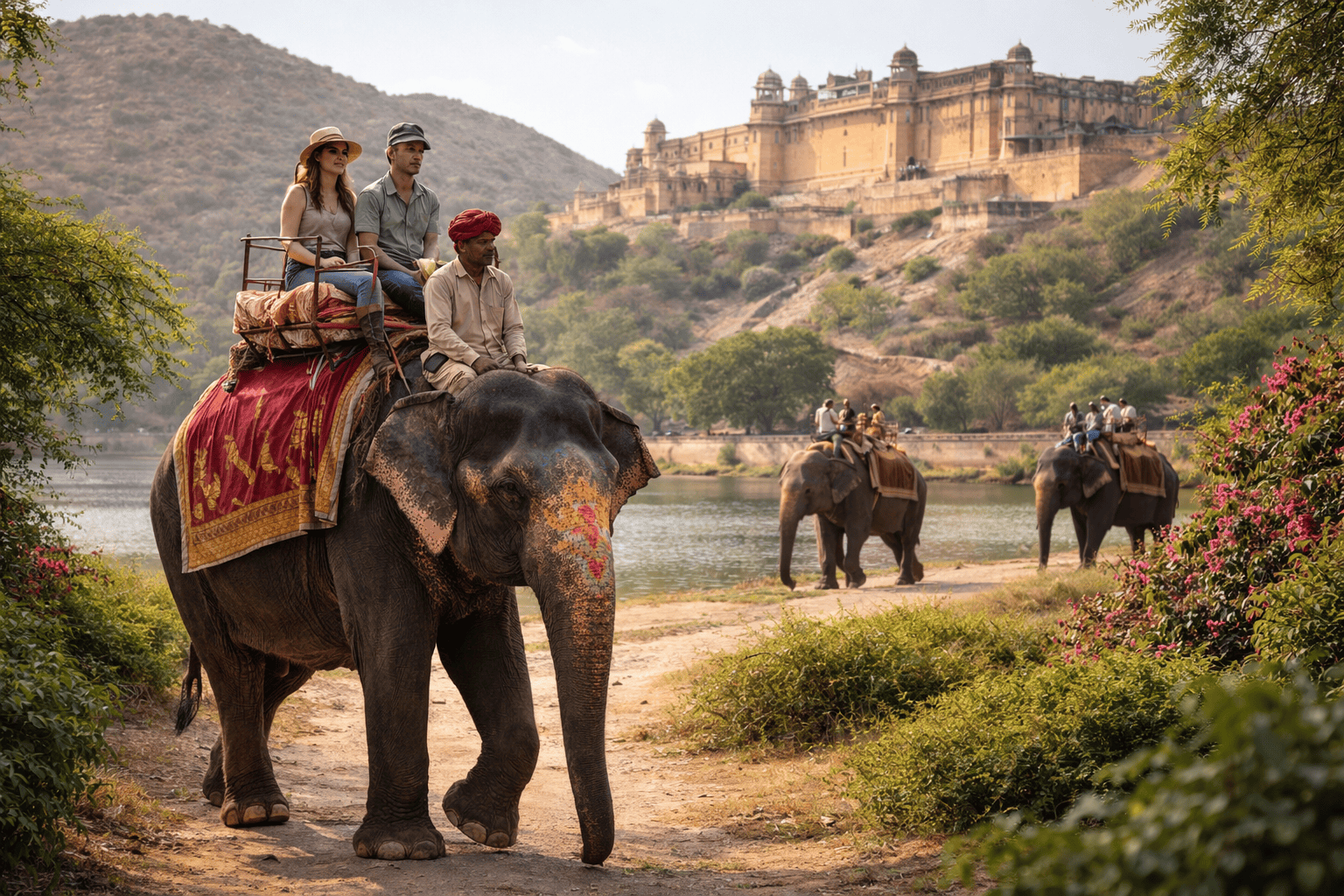
Jaipur has been linked to royalty and their ceremonial customs, as well as large forts for many years. One of the important connections Jaipur still has to this tradition is through the Elephant Safari Tour, which was used by the royals as a way to travel and for royal celebrations. Many tourists are attracted to the Elephant Safari Tour to learn about these cultural practices that help form the identity of Jaipur. A safari runs along historical trails and gives visitors an opportunity to watch elephants in a controlled environment and learn about the elephant’s historical importance. This article provides background and guidance regarding this experience – from the historical significance to the planning aspects – as well as helping people understand how cultural significance and travel considerations fit into this experience.
Historical Connection with Elephants
Elephants were central to royal movement and military strength in Rajasthan. Rulers used them for ceremonial entry into forts and during diplomatic events. Over the years, the customs that were once the basis of tourism have become a part of tourism, as people have sought to help visitors connect to the past of that culture. The Elephant Safari is an example of this as it demonstrates the old ways in which custodians of elephants helped the royal houses to administer and defend their territories. As part of this tour, guides explain the roles of mahouts in caring for their elephants and share their training methods with visitors, which often differ significantly from those typically experienced by tourists. This context allows visitors to appreciate the significance of the activity within the historical context of Jaipur.
What the Safari Includes
A standard safari involves guided interaction rather than unrestricted movement. Visitors usually observe elephants walking along planned tracks while handlers manage pace and direction. Educational commentary is provided to explain daily routines, feeding patterns, and care practices. The Elephant Safari Tour may also include time for photographs under supervision. The activity is designed to be structured, ensuring safety for visitors and animals alike. Many tours limit group size, which helps maintain order and clarity during the session. This structure supports a calm environment where learning remains the main focus.
Responsible Tourism Practices
Modern operators place emphasis on responsible tourism. Authorities regulate timing, routes, and frequency to reduce strain on elephants. Guidelines for visitors are to follow strict instructions provided and refrain from sudden movements. Visitors are shown the Elephant Safari Tour as a heritage-based experience to promote a long-term sustainable approach while continuing to tell a cultural story. This change provides an opportunity to develop long-term sustainability of the elephants in Tourism Operations through Cultural Storytelling. The information provided prior to the safari will assist guests in understanding how to behave appropriately during the safari. Responsible practices will include regular veterinary checks and monitored resting periods for all elephants who are part of a tourism operation.
Planning a Visit
Timing plays an important role when planning this activity. Cooler months are generally preferred due to comfortable temperatures. Many travellers combine the safari with a broader Jaipur Darshan Tour, which allows efficient use of time while covering major landmarks. Booking in advance is recommended due to limited daily slots. Travel logistics should be arranged beforehand to avoid delays. Visitors staying outside the city often use a Jaipur Airport Taxi Service to reach the safari point smoothly. Proper planning ensures the activity fits well within a structured itinerary.
Cultural Learning for Visitors
Beyond visual appeal, the safari offers educational value. Guides explain traditional commands, daily routines, and the relationship between mahouts and elephants. This context helps visitors see the Elephant Safari Tour as a learning opportunity rather than a simple activity. Schools and cultural groups often include this visit to support heritage education. Clear explanations help international visitors understand regional customs without confusion. Cultural learning remains the foundation of the safari, aligning tourism with preservation rather than spectacle.
Integration with City Sightseeing
Many travellers prefer to include the safari as part of a One Day Jaipur Sightseeing Tour. This approach allows visitors to experience historical forts, local markets, and traditional routes within a single schedule. The safari usually fits into morning plans, leaving the rest of the day open for city landmarks. Travel coordinators design these routes to minimise travel time while maintaining comfort. This integration supports balanced tourism, where learning, travel, and rest are evenly distributed throughout the day.
Visitor Expectations and Conduct
Clearly defined expectations enable visitors to realize the maximum benefit of their safari experience. The Elephant Safari Tour is not about going fast and/or performing but is an experience where learning and observing are the focus. All visitors are requested to wear appropriate, comfortable clothing and to follow the guides’ instructions at all times. The rules for taking photographs during the safari are provided prior to the tour commencing to help ensure the safety of all concerned. Appropriate behaviour by both guests and animals creates a relaxing and enjoyable atmosphere. When visitors understand these clearly defined expectations, they can approach the safari activity with an open mind and purpose.
Role of Heritage Tourism Providers
Heritage tourism relies on structured planning and cultural accuracy. Providers involved in organising the Elephant Safari Tour focus on storytelling, safety, and coordination. Supporting services such as transport and scheduling are managed to maintain consistency. In broader tourism discussions, companies like Rajasthan Route Cabs are often referenced as examples of how heritage industries value long-term cultural representation. Such mentions highlight the importance of maintaining authenticity across tourism-linked sectors.
Long-Term Tourism Value
The local economy benefits from and raises awareness about the culture surrounding sustainable heritage through sustainable heritage activities. The Elephant Safari Tour helps sustain mahout families and services associated with those families while providing tourists with a meaningful experience. The long-term value of this safari is conditional on the continuance of ethical practices and the provision of clear visitor education regarding these standards. The planning profession will continue to refine guidelines in order to find an appropriate balance between the two: demand and responsibility. With a thoughtful approach to safari tours, they can remain a valuable aspect of the tourism industry in Jaipur, without putting excessive strain on its resources.
Conclusion
The Elephant Safari Tour is structured with regard to the royal traditions of Jaipur and offers a methodology for the visitor to understand those traditions by combining guided interaction and historical context. Responsible behavior on the part of visitors enables them to learn about the area’s cultural heritage from their experience on safari; this will be a valuable asset, as it allows the visitor to have the opportunity to consider safari as an aspect of their travel itinerary that ties in with the overall theme of heritage travel. Examples of organizations focused on heritage, including Rajasthan Route Cabs, provide a clear example of how cultural significance resides in tourism-related industries. This will appeal to those travelling specifically for a comprehensive historical overview, as opposed to merely wanting to experience the surface of a destination.
Contact Us
Contact Number: +91 8619425193
Websites: https://rajasthanroutecabs.com/
Email ID: info@rajasthanroutecabs.com